
If you've Googled "HydroFacial near me" or asked a friend in Orange County what facial actually works, you've probably heard the name a hundred times. There's a reason — it's the treatment we book more than any other at the studio, and it's the one I personally get every four weeks.
But there's also a lot of marketing noise around it. So this guide is the version I wish more clients had read before their first appointment: what a HydroFacial actually does, how it's different from a regular facial, who it works best for, and how often you should realistically book one.
What is a HydroFacial, exactly?
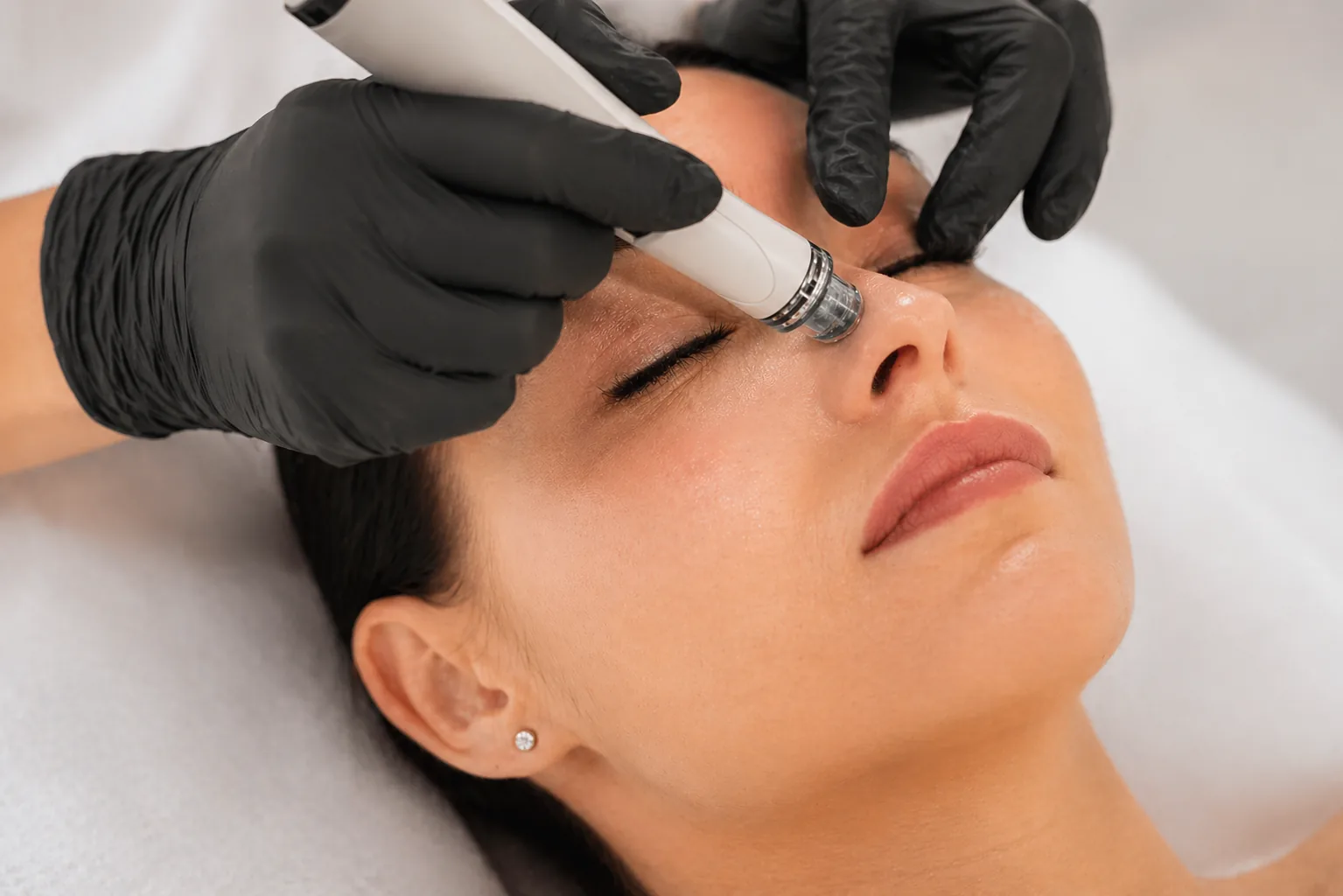
A HydroFacial is a multi-step facial that uses a handheld wand with vortex suction and infused serums to do four things in one session: cleanse, exfoliate, extract, and hydrate. The wand glides across your skin, lifting dead cells and pore debris while simultaneously pushing in nourishing serums. The category was popularized by the HydraFacial brand, and the technology has since become a staple in licensed esthetics practices.
Unlike a traditional facial — where extractions are done by hand and steam softens the skin — the HydroFacial does it all with controlled, gentle suction. The result is the same goal (clean pores, glowing skin), but with no pinching, no redness, and no downtime. You walk out looking like you slept ten hours.
The 4 steps of a HydroFacial
Here's what's actually happening when you're on the bed:
- Cleanse + peel: A gentle exfoliating serum lifts the surface layer of dead skin and oil. This is the prep — like sweeping the floor before mopping.
- Extract + hydrate: The wand uses vortex suction to clear out blackheads, congestion, and trapped sebum from your pores. At the same time, hydrating serum is being pushed in.
- Infuse: Custom serums are layered based on your skin's needs that day — antioxidants for dullness, peptides for firmness, brighteners for tone.
- Protect: The session finishes with LED light therapy, moisturizer, and SPF. You're done in 45–60 minutes.
HydroFacial vs. a regular facial: what's the actual difference?
This is the question I get most often. Both treatments aim to clean and refresh the skin, but they go about it in very different ways.
A traditional facial is a hands-on, esthetician-driven treatment. We use steam to soften the skin, manual pressure to extract congestion, and massage to stimulate circulation. It's relaxing, deeply customizable, and great for sensitive skin. But results vary based on the esthetician's technique, and extractions can leave temporary redness.
A HydroFacial is machine-assisted. The wand controls the pressure, the serums are pre-formulated, and the suction does the extraction work without manual pinching. That makes it more consistent visit-to-visit and gentler on reactive skin. The trade-off: it's less hands-on, so if you book facials primarily to relax, a traditional facial might feel more spa-like.
If your goal is visible results — clearer pores, brighter tone, smoother texture — book the HydroFacial. If your goal is a full hour of being pampered, the traditional facial is still the move. Most of my clients alternate.
Who is the HydroFacial best for?
Honestly? Almost everyone. That's part of why it became so popular. But here's how I think about it for different skin concerns:
Congested or oily skin
This is where the HydroFacial really shines. The vortex suction pulls out blackheads and congestion that manual extractions can't always reach. If you've been dealing with persistent texture on your nose, chin, or forehead, you'll see the difference after one session.
Dull or uneven tone
The exfoliation step removes the dead surface layer that makes skin look flat. Combined with brightening serum infusions, your skin reflects light better immediately. Photographers love this treatment for clients before shoots.
Mild acne and post-acne marks
The HydroFacial pairs well with our acne treatment protocols. It clears congested pores without trauma, and the serums help fade post-inflammatory hyperpigmentation. For active cystic flares, we'd start with a calming acne facial and graduate to HydroFacials once the inflammation is down.
Sensitive or rosacea-prone skin
Surprisingly, yes. The suction is adjustable and there's no harsh scrubbing. We just skip the more aggressive serums and use a calming protocol. Always tell your esthetician about reactivity at booking — we'll customize.
Anti-aging concerns
For fine lines and firmness, we layer in peptide serums and finish with red LED light therapy to stimulate collagen. Booked monthly, the cumulative effect is a noticeable lift in skin texture and tone over 90 days.
Want to try it for yourself?
The first HydroFacial is the one that hooks you. Book your appointment at our Orange, CA studio.
Book a HydroFacialHow often should you get a HydroFacial?
Once every 4 weeks is what I recommend to almost every client. That cadence lines up with your skin's natural cell turnover cycle (roughly 28 days), which means each treatment is working with your skin's renewal — not against it.
Some clients ask if they can come more often, especially before events. The answer is yes, but with a caveat: more frequent treatments without proper at-home care won't give you better results. Your skin needs time between sessions to rebuild its protective barrier. If you have a wedding or event, book a HydroFacial 5–7 days before — that's when the glow peaks.
If monthly visits feel like a lot to commit to, consider one of our membership plans. Members get the lowest per-treatment rate and we automatically schedule the cadence that's right for your skin.
Can you stack a HydroFacial with other treatments?
Yes — and this is where I think a lot of clients leave results on the table. The HydroFacial pairs beautifully with:
- Dermaplaning beforehand: Removes peach fuzz and dead skin so the HydroFacial serums penetrate deeper.
- A light chemical peel as a boost: Adds an extra layer of exfoliation for tone correction. Best for non-sensitive skin.
- BioRePeel add-on: The "lunch break peel" stacked with HydroFacial extraction is one of our most-booked combos for tone, texture, and zero downtime.
- LED light therapy after: Already included in our standard HydroFacial — but you can extend the LED time for stronger collagen or anti-acne results.
What to expect at your first appointment
Your first visit takes about 75 minutes total. We start with a 10-minute consultation — I'll look at your skin under a magnifying lamp, ask about your routine and concerns, and customize your protocol. The treatment itself is 45–60 minutes. Most of it feels like a cool glass roller moving across your face.
You won't see immediate dramatic redness. Some clients have a slight pink flush for 30–60 minutes after, which fades fast. You can wear makeup the same day, but most people skip it because the post-treatment glow is the whole point.
Aftercare: do these 5 things and your results last longer
- Skip retinol and acids for 24 hours. Your skin just got a deep exfoliation — let it rest.
- SPF 30 minimum every morning. Non-negotiable. Fresh skin is more UV-sensitive — the American Academy of Dermatology recommends daily broad-spectrum sunscreen for everyone.
- Hydrate aggressively for 48 hours. Your skin is primed to absorb moisture — give it your best hydrating serum.
- Don't pick at anything. If something surfaces post-treatment, let it run its course. Picking creates marks.
- Book your next session. The compounding effect from monthly treatments is where the magic happens.
The honest bottom line
The HydroFacial isn't magic, but it's the closest thing in the facial world to a reliable, repeatable result. It's the treatment I recommend most often to first-time clients because it works for almost every skin type, has zero downtime, and the glow is immediate enough that you actually see the value.
If you've been on the fence, book one. If you've had one elsewhere and weren't impressed, the difference is usually in the protocol customization and serum quality — that's where we put our care at MASHMEOVER.
Either way, your skin deserves more than guessing. Come let me look at it.