
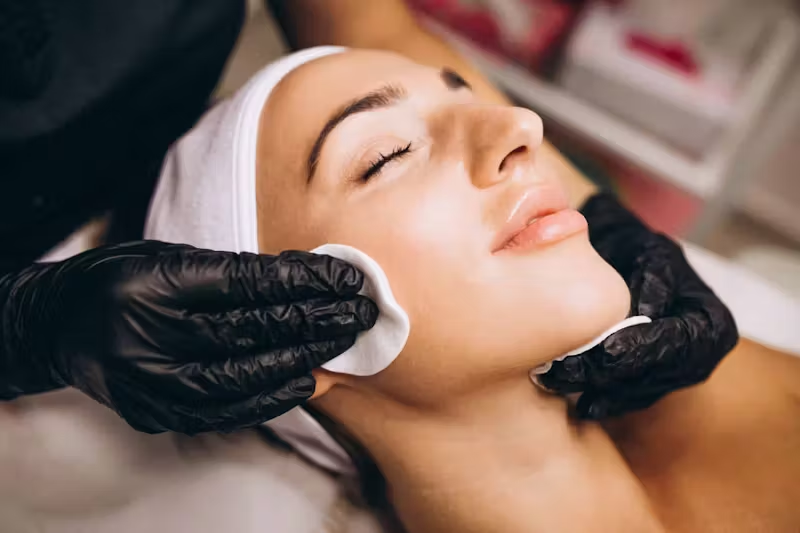
If you walk into a spa in Orange County and ask for a chemical peel, you might leave with anything from a mild glycolic refresh to a full-on TCA resurfacing. The same words mean different things at different places — and that's the part most clients don't realize until they're three days into recovery wondering why their face is shedding like a snake.
So this is the guide I wish more first-time peel clients had read. It walks through the three real strength levels, who each one is for, which acid does what, and how to know when BioRePeel is the smarter call instead. I'll keep it honest — including when a peel is the wrong choice.
What a chemical peel actually does
A chemical peel is a controlled exfoliation. We apply a solution — usually some combination of acids like glycolic, salicylic, lactic, mandelic, or TCA — to the skin, let it work for a defined amount of time, then neutralize and cleanse. The acid loosens the bonds between dead skin cells so they shed faster than your body would do on its own, revealing the fresher, smoother skin underneath.
The deeper the acid penetrates, the more dramatic the result and the longer the recovery. That's the whole tradeoff in a nutshell. According to the American Academy of Dermatology, peels are used to treat acne, sun damage, fine lines, melasma, and uneven skin tone — but the right peel depth depends on what you're treating and how reactive your skin is.
The three strength levels — what each one means
Every chemical peel falls into one of three categories. The category is determined by how deep into the skin the acid penetrates, not by which brand or product you're using.
- Superficial peels — work on the outermost layer of skin (the stratum corneum). Sometimes called a "lunch peel" because there's almost no downtime. Glycolic, lactic, mandelic, and salicylic acid peels at lower concentrations usually fall here.
- Medium peels — penetrate through the epidermis into the upper dermis. TCA peels at 15–35% concentration, Jessner's solution, or layered glycolic protocols. Recovery is 5–10 days of visible flaking.
- Deep peels — penetrate into the mid-dermis. High-concentration TCA (above 35%) or phenol-based peels. Recovery is 2–3 weeks. These are almost always performed in a medical office under sedation, not in an esthetics setting.
At our Orange, CA studio, we focus on superficial and medium peels — that's the sweet spot for visible, sustainable results without the medical-procedure downtime. For anything deeper, we'd refer you to a dermatologist.
Superficial peels: who they're for
This is where most clients should start. A superficial peel gives you a noticeable glow within a day or two, without scaring you off the whole category. Most clients have no visible peeling — maybe a slight tightness or pinkness that fades within hours.
Superficial peels are the right choice if you're dealing with any of:
- Dullness or rough texture you can't get rid of with at-home exfoliants
- Mild congestion, blackheads, or post-acne marks
- Early signs of sun damage but no deep lines yet
- Skin that needs a refresh before an event, wedding, or shoot
- First-time peel clients who want to test how their skin reacts
We usually pair superficial peels with our HydroFacial protocols or follow them with a dermaplane facial for an even smoother finish. Think of a superficial peel as routine maintenance — booked monthly or every 4–6 weeks, the cumulative effect is significant over 3–4 months.
Medium peels: who they're for
Medium peels are the level-up. These are for clients who've already done superficial peels and want bigger results, or who have specific concerns a superficial peel can't reach.
Medium peels work well for:
- Visible sun damage, age spots, and stubborn hyperpigmentation
- Fine lines around the eyes and mouth
- Acne scarring — not active acne, but the texture left behind
- Melasma (with the right protocol and pre-treatment)
- Skin that's plateaued on superficial peels
The catch is the downtime. Day 2–3 you'll be visibly flaking. Day 4–6 your skin will look ruddy and patchy. By day 7–10 the new skin is in, and it's noticeably brighter and more even. This is not a peel to book the week of a wedding. It is a peel to book the month before.
The clients who get burned on medium peels — pun intended — are usually the ones who didn't take pre-treatment seriously. The prep is half the result. Always tell your esthetician about every product you use, every medication you're on, and any sun exposure in the last two weeks.
Deep peels: who they're for (and who they aren't)
Deep peels are dramatic — and they're not what we offer at MASHMEOVER. Honesty matters here. A deep peel can resurface significant scarring and deep wrinkles in one session, but it requires sedation, a controlled medical environment, and 2–3 weeks of careful recovery. The risk of pigment changes is real. If a deep peel is the right call for your concern, we'd send you to a board-certified dermatologist or plastic surgeon.
The good news: very few clients actually need a deep peel. Most of what people assume requires one — sun damage, mild scarring, fine lines, dull skin — responds beautifully to a series of medium peels or a BioRePeel program.
Which acid for which skin concern
Strength level is one variable. The acid you use is the other. Here's the cheat sheet I give my clients:
Glycolic acid (AHA)
The classic. Small molecule, penetrates well, works on tone and texture. Great for dullness and fine lines on lighter skin tones. Can be risky on darker skin (post-inflammatory hyperpigmentation) at higher concentrations — we'd use it sparingly there.
Salicylic acid (BHA)
The acne acid. It's oil-soluble, which means it penetrates the pore — exactly where acne lives. If you're actively breaking out, salicylic peels are usually the first move. Often paired with our acne treatment protocols.
Lactic acid (AHA)
Gentler than glycolic. Best for sensitive skin, melasma-prone skin, and clients with darker tones who want results without the pigmentation risk. Also a great hydrator — your skin won't feel as parched after a lactic peel.
Mandelic acid (AHA)
The biggest molecule of the AHAs, so it penetrates slowly. That's a feature, not a bug — it makes it the safest choice for melasma and Fitzpatrick IV–VI skin. Building popularity fast in clinical esthetics, including ours.
TCA (Trichloroacetic acid)
The heavy hitter. At low concentrations (10–20%) it's a medium peel; above that, it gets into deep peel territory. Excellent for serious sun damage, scarring, and deep texture work. Higher recovery, higher reward.
Not sure which peel you need?
Take our 60-second "Which Facial Is Right For Me" quiz — it'll route you based on your skin type, goals, and downtime tolerance. Or book a quick consult and we'll pick the right protocol together.
Book a ConsultPeel vs. BioRePeel: the no-downtime option
Half the clients who come in asking for a chemical peel end up booked for BioRePeel instead. Here's why.
BioRePeel is a biphasic TCA peel that delivers medium-peel-level results without visible peeling. The formula combines an exfoliating acid layer with a biostimulant layer — so while it's resurfacing the surface, it's also signaling your skin to produce new collagen. The result is the brightness and tone correction of a medium peel, without the week of social downtime.
It's not a magic shortcut for every concern. If your goal is deep scarring or significant sun damage, you'll still see better results from a traditional medium TCA peel series. But for clients who want professional-grade resurfacing and can't take time off work, BioRePeel is genuinely the right answer. We see it most often used for:
- Pre-event glow without flaking risk
- Working professionals who can't take days off
- Maintenance between deeper peels
- First-time peel clients who want to dip a toe in
How many sessions you actually need
Most chemical peel programs run as a series of 4–6 sessions. Superficial peels are spaced about 4 weeks apart; medium peels go 6–8 weeks apart. After your initial series, maintenance is usually one peel every 8–12 weeks to hold your results.
One-and-done peels exist, but they're better for an event-prep glow than for actual skin change. The reason: real change happens through repeated, controlled cycles of exfoliation and recovery. Your skin needs to remodel — and that's a months-long process, not a weekend.
If you're committing to a series, our Skin-scription membership usually saves clients meaningful money compared to paying per session. We also bundle the peel with complementary services (LED, dermaplane, hydrofacial) so each appointment compounds the work the last one did.
Prep, aftercare, and the mistakes to avoid
The prep window starts 5–7 days before your peel. Here's what we tell every client in Orange, CA:
Before your peel
- Stop retinol, tretinoin, and prescription topicals 5–7 days before (your esthetician will confirm timing based on the peel depth).
- Pause AHA and BHA products at home.
- Don't wax, thread, or laser the treatment area for 2 weeks before.
- Skip aggressive sun exposure — no sunbathing the weekend before.
- Tell us about any oral medications, especially Accutane (we need to wait 6+ months after stopping Accutane before any peel).
After your peel
- SPF 30 broad-spectrum every single morning. Fresh skin is hypersensitive to UV — per the AAD's chemical peel FAQ, sun protection is the single most important thing you do after a peel.
- Hydrate aggressively for 48 hours. Skip the foaming cleanser — switch to cream cleansers and ceramide moisturizers.
- No retinol, no exfoliants, no scrubs until the peeling is fully resolved.
- Hands off. The flakes will fall on their own. Picking causes scarring.
- No hot showers, sauna, or strenuous workouts for 48–72 hours (heat aggravates inflammation).
And one more thing — don't book a peel the week of an event without talking to your esthetician first. The right peel at the right depth can make you glow for a wedding. The wrong peel four days out can have you covering up flaking with concealer. We'll always tell you what's realistic for your timeline.
Book your chemical peel at MASHMEOVER Esthetics in Orange, CA
If you're new to peels, we usually start with a consultation — a quick skin analysis, a conversation about your goals and your downtime tolerance, then a recommendation for the right peel depth and acid. From there, we build a series that fits your life. Most clients see their first meaningful shift around session three.
We offer customized peels alongside our chemical peel service and the no-downtime BioRePeel. Both are bookable on Vagaro or by calling (714) 809-2851.