
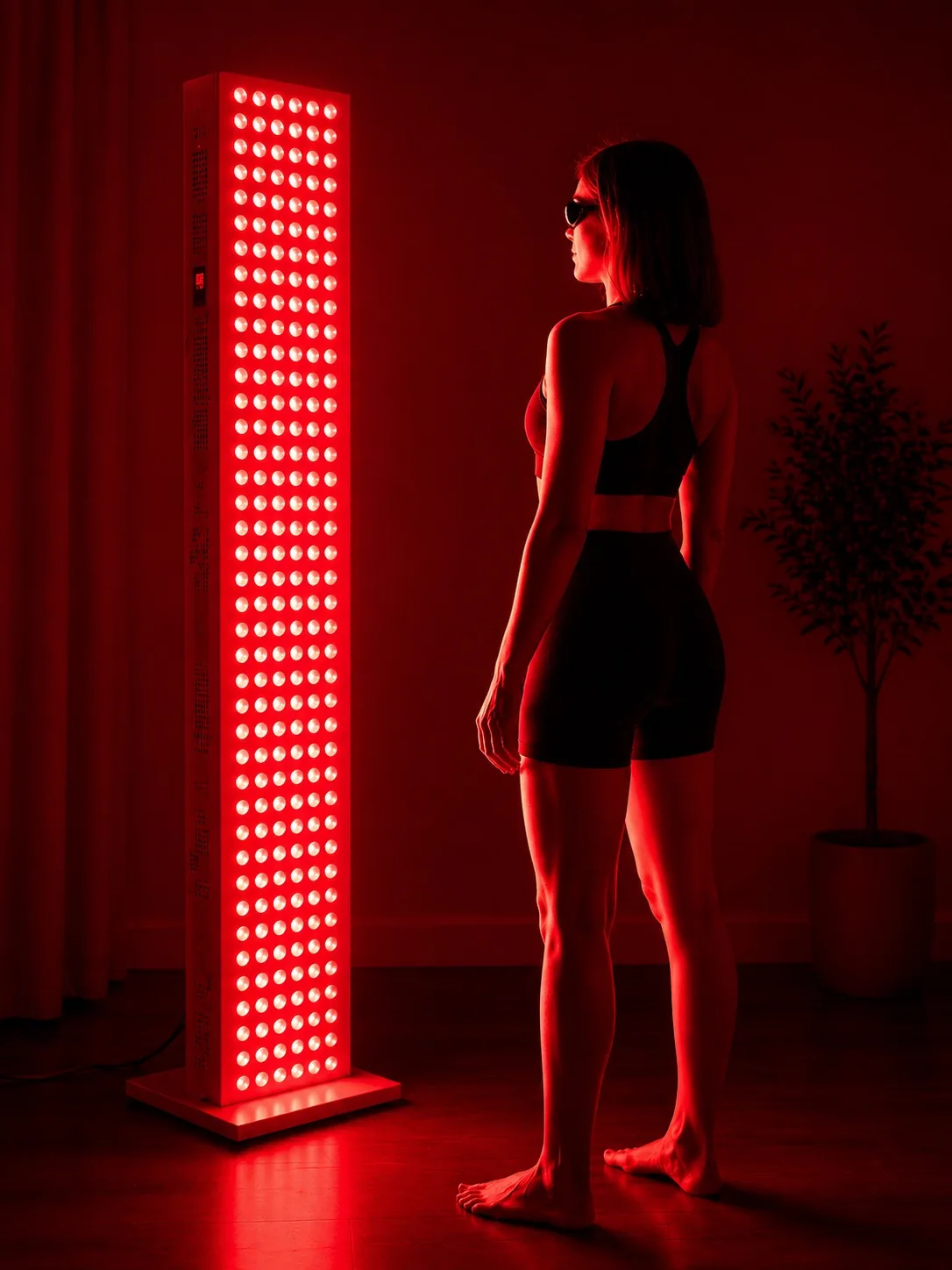
LED light therapy went from cult skincare treatment to full mainstream in the last three years. Everyone from dermatologists to TikTok influencers is talking about it, and every client in my Orange, CA studio has questions.
The most common one: "Should I be doing red light or blue light?" The honest answer is that they're different tools for different jobs — using the wrong one for your skin concern is a waste of both money and time.
Here's the same walkthrough I give every client before we build LED into their treatment plan.
The short answer — what each color actually does
- Red LED (630–660 nanometers): Reduces inflammation, stimulates collagen production, supports healing and recovery. Best for aging, post-treatment repair, sensitive skin, and general skin health.
- Blue LED (405–420 nanometers): Targets the bacteria that cause acne. Best for active breakouts and oily/acne-prone skin.
- Combined red + blue: Treats acne AND its inflammation together — the sweet spot for most acne-prone clients.
Pick the color based on your skin goal, not what's trendy. Red doesn't help active acne much. Blue doesn't help fine lines much. The right session uses whichever wavelength matches your actual concern.
The science — how LED wavelengths work
LED (light-emitting diode) therapy uses specific wavelengths of visible light — no UV, no heat, no downtime. Different wavelengths penetrate different depths into skin and trigger different cellular responses. This mechanism is called photobiomodulation, and it's the same principle used in low-level laser therapy in medical settings.
The short version: light energy at specific wavelengths gets absorbed by cellular structures (mitochondria for red, bacterial porphyrins for blue), which triggers downstream biological effects. It's not "shining light on skin and hoping" — the wavelengths are chosen because they match specific biological absorption peaks.
Red LED penetrates about 5 to 10 millimeters into skin — into the dermis where fibroblasts (collagen-producing cells) live. Blue LED penetrates about 1 millimeter — staying at the surface where acne-causing Cutibacterium acnes bacteria live inside pores.
That difference in depth is why the two colors do such different things.
Red light — what it treats and who it's for
Red light therapy is the workhorse LED wavelength. What it does well:
- Stimulates collagen production. Fibroblasts respond to red light by producing more collagen and elastin — the structural proteins that keep skin firm.
- Reduces inflammation. Anti-inflammatory effect is why red LED calms rosacea flares, post-facial redness, and general reactive skin.
- Supports post-treatment healing. Skin heals faster and with less residual redness after chemical peels, dermaplaning, or extractions when red LED is layered in immediately after.
- Reduces fine lines over a course. Not a wrinkle eraser — but a real, measurable improvement in texture and firmness over 8 to 12 weekly sessions.
Who red LED is really for
- Clients in their late 30s and up focused on prevention or reversal of early aging
- Anyone recovering from an in-clinic treatment (peel, dermaplane, extractions)
- Rosacea, reactive skin, or persistent post-inflammatory redness
- Anyone with a slow-healing skin barrier who wants to speed recovery
Blue light — what it treats and who it's for
Blue LED does one thing very well: it kills acne-causing bacteria on and just under the skin surface. When the light hits bacterial porphyrins inside C. acnes, it produces reactive oxygen species that damage the bacteria — which reduces active breakouts.
What blue light does well:
- Reduces active acne bacteria. Measurable effect after 4 to 6 sessions.
- Calms inflammatory breakouts. Papules and pustules respond within the treatment course.
- Regulates sebum production in some clients. The mechanism is less well understood but real for many oily-skin clients.
Who blue LED is really for
- Clients with active inflammatory acne (papules, pustules, red bumps)
- Oily skin that flares seasonally with humidity or hormones
- Anyone in an active acne treatment protocol where blue LED is one layer of a multi-modal plan
Blue LED does NOT treat existing dark spots from healed acne. That's post-inflammatory hyperpigmentation — a separate problem best addressed with chemical peels, professional exfoliation, and targeted brightening actives.
Combining red and blue in one session
For most acne-prone clients, the best session uses both wavelengths — blue to attack the bacteria driving the breakout, red to calm the inflammation the breakout is causing. This dual-wavelength approach is often called "combination LED" or "full-spectrum LED."
Sequence in a typical session at MASHMEOVER Esthetics in Orange, CA:
- Cleanse and lightly exfoliate (LED penetrates cleaner skin better)
- Blue LED for 10 to 15 minutes on the affected area
- Red LED for 10 to 15 minutes across the full face
- Serum, moisturizer, SPF (if daytime)
Total session time: 30 to 45 minutes. Zero downtime. Skin looks calmer within an hour and continues to improve over the next 24 to 48.
Book LED light therapy in Orange, CA
Right now: 6 months of unlimited Platinum LED sessions at $99/month (regularly $199/month). Perfect for anyone starting a full LED course. Book online in 30 seconds.
Book at VagaroLED as an add-on vs standalone treatment
LED works two ways in a real skincare plan:
Add-on to another treatment (most common)
LED layered onto the end of a facial, chemical peel, or dermaplane boosts the primary treatment's results. Skin is freshly exfoliated and receptive — LED wavelengths penetrate more efficiently, healing happens faster, and cumulative results are better.
Add-on LED is typically $25 to $50 on top of the base treatment. Best value per session for most clients.
Standalone LED course (for active protocols)
A standalone LED session runs 20 to 30 minutes and $50 to $100. Standalone makes sense during an active acne treatment plan (2 to 3 sessions per week for a course), during a targeted anti-aging protocol (weekly for 8 to 12 weeks), or as maintenance between deeper treatments.
Home LED masks vs professional-grade LED
At-home LED masks became a big trend around 2022 and haven't slowed down. Are they worth it?
Short answer: they're a fine daily maintenance layer, but they cannot match a professional device on intensity. Professional LED panels deliver much higher irradiance (light energy per square centimeter) than any consumer mask on the market. A 20-minute professional session delivers what would take an at-home mask 60 to 90 minutes to match — and most at-home devices cannot reach the deeper red wavelengths at all.
The right stack: professional LED sessions during an active treatment plan or once a month for maintenance, at-home mask 3 to 5 nights per week between visits. That combination delivers real cumulative results without either being wasteful.
What LED won't do — the honest limitations
To set expectations properly, LED is not a magic wand. Here's what it does not do:
- Replace a chemical peel or dermaplane. LED does not remove dead skin, unclog pores, or resurface. It complements those treatments — it does not replace them.
- Erase deep wrinkles or sagging. Real structural aging responds to peels, microneedling, and prescription actives more than LED alone.
- Fade existing dark spots quickly. Post-inflammatory hyperpigmentation from old acne responds better to professional peels and targeted brightening actives than to LED.
- Deliver results in one session. LED is a cumulative treatment. If someone promises visible transformation from one LED session, be skeptical.
- Work through makeup or heavy sunscreen. Skin must be clean before LED. Any pigment on the surface blocks penetration.
Every treatment plan we build at our skin care clinic starts with these honest limitations so clients know what LED will and won't do for them.
My honest recommendation for Orange County clients
If you have active acne, book combined red + blue LED as part of an acne treatment protocol. Two to three sessions per week for 4 to 6 weeks, then weekly maintenance.
If you're 35+ and focused on prevention and skin quality, book red LED as an add-on to your monthly facial. Every 4 weeks. Compounds beautifully over 6 to 12 months.
If you're recovering from an in-clinic treatment (peel, dermaplane, extractions), red LED immediately after speeds recovery and reduces residual redness.
If you're doing the $99/month unlimited LED membership (currently offered at our Orange, CA studio), book 2 sessions per week for the first 8 weeks — that's where the real transformation happens — then step down to weekly or bi-weekly for maintenance.
Any questions I haven't answered, my team and I are reachable by phone at (714) 809-2851 or you can book online any time.