
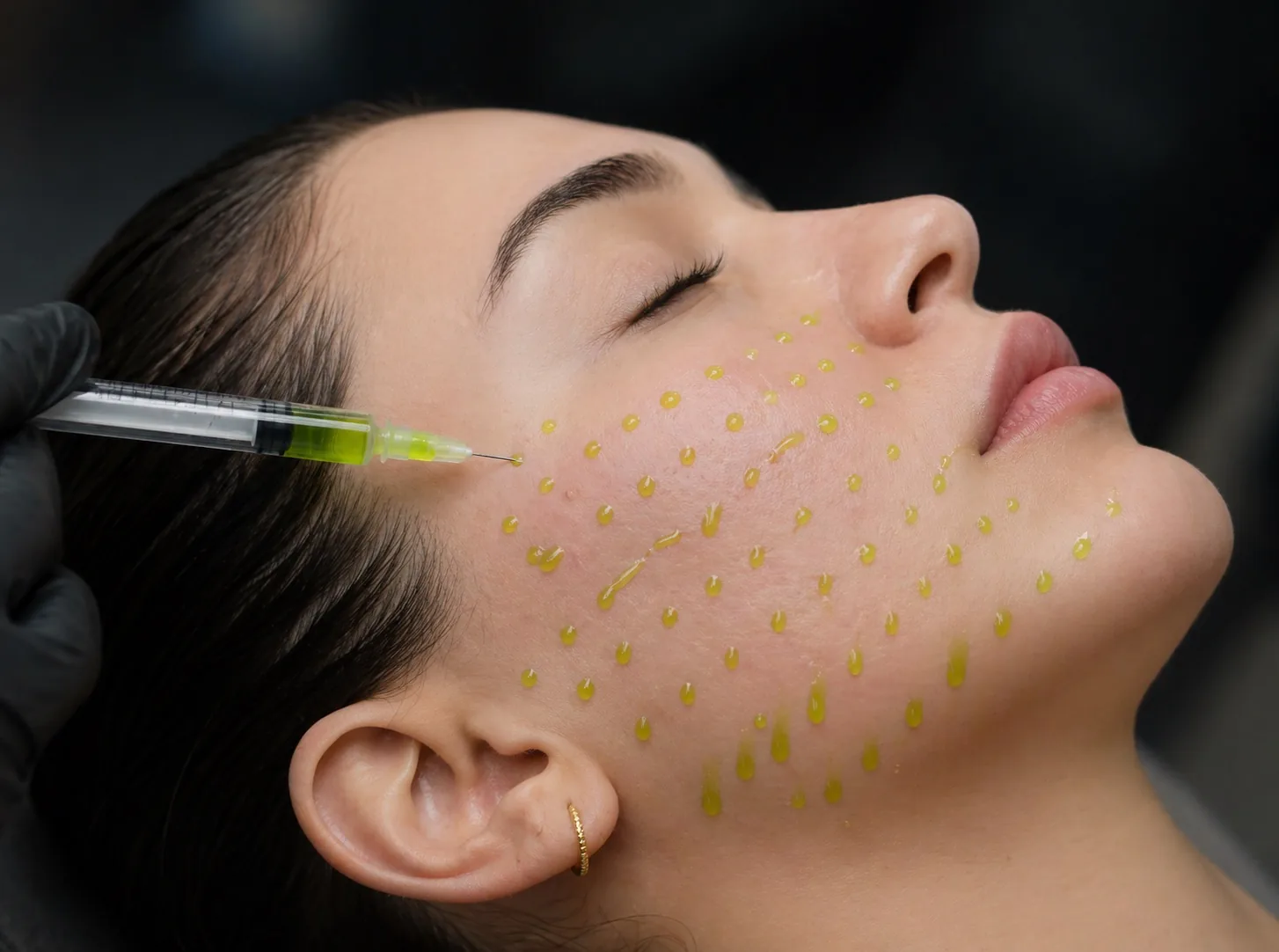
The phone conversation happens at least once a week: "I want a chemical peel, but I can't take a week off work to look like a lizard." That's the exact problem BioRePeel solves — and it's why it's become one of the most-booked treatments at our Orange, CA studio in the past year.
This guide is the version I wish more clients had before their first appointment: what BioRePeel actually is, how the two-phase formula works differently from a traditional peel, what to expect session-by-session, and who it's best for.
What BioRePeel actually is
BioRePeel is a professional-grade biphasic chemical peel using 35% TCA (trichloroacetic acid) combined with skin-nourishing actives. It resurfaces the skin, fades pigmentation, stimulates collagen, and refines pore texture — but does all of this without visible peeling.
The "biphasic" part is the innovation. Traditional chemical peels are single-phase: you get the acid, you get the resurfacing, you get the flaking. BioRePeel splits the delivery into two phases — an oil phase and a water phase — that work at different depths of the skin simultaneously.
The result: you get the exfoliation and collagen response of a real TCA peel, but the skin barrier stays intact, so you don't peel visibly. Which means you walk out looking better than when you walked in, not worse.
How the biphasic formula works
Understanding the two phases makes it obvious why BioRePeel is different:
Phase 1: The oil phase
The oil (lipid) phase carries TCA and salicylic acid deep into the skin — reaching the layers where pigmentation, collagen breakdown, and acne inflammation happen. Because it's lipid-based, it penetrates through the skin's natural oil barrier without disrupting it.
Phase 2: The water phase
The water (hydrophilic) phase delivers hydrating and antioxidant serums at the surface — vitamins, amino acids, and peptides that repair and calm the skin while the acids are working underneath.
The two phases activate together on your skin. The acids do the resurfacing work below; the actives do the healing work above. Your skin barrier never has to break down and rebuild — which is why there's no flaking.
What skin concerns BioRePeel treats
BioRePeel is one of the most versatile treatments on the menu — it's effective across a wide range of skin concerns:
- Hyperpigmentation: Sun spots, melasma, and post-inflammatory dark marks fade with a series. The TCA + salicylic combination targets both surface pigment and deeper melanin activity.
- Fine lines and early aging: The collagen response is real. Clients notice smoother texture and firmer skin by session three or four.
- Acne scarring: Especially effective for the post-inflammatory marks that linger after breakouts. Pairs well with our acne treatment protocol.
- Enlarged pores: The resurfacing action tightens pore appearance without physically closing them.
- Dull, uneven texture: Even one session brings back light reflectivity — the "glow" people describe after peels, without the peeling part.
- Active mild acne: Salicylic acid in the formula clears comedones while the resurfacing helps prevent new scarring.
What to expect at your appointment
Your first BioRePeel appointment runs about 45–60 minutes total. Here's the flow:
Consultation (10 minutes)
We look at your skin under a magnifying lamp, ask about your routine and concerns, and confirm BioRePeel is right for your skin today. If you're on Accutane or have active cystic acne, we may recommend a different treatment first.
Prep (5 minutes)
Deep cleanse to remove makeup, oil, and any surface debris. This is important — clean skin lets the peel penetrate evenly.
The peel itself (10–15 minutes)
The solution is applied in layers with gentle massage. You'll feel a mild tingling — nothing painful. Most clients describe it as "warm" rather than "burning." Unlike traditional peels, there's no ice water or cooling fan needed.
Neutralize + finish (10 minutes)
The peel is neutralized, and your skin gets a hydrating mask, calming serum, and SPF. Some clients add LED light therapy here for extra collagen and healing.
You walk out looking slightly pink for about 15–30 minutes — that fades fast — and slightly glowing. Zero peeling. Makeup is fine to wear starting the next morning.
Ready to try BioRePeel?
Book a BioRePeel consultation at our Orange, CA studio. First-time clients get a full skin analysis included.
Book Your ConsultationResults timeline: session-by-session
What actually happens over a full BioRePeel series:
After session 1
Skin looks brighter and slightly plumper within 24–48 hours. Fine lines look softened. This first session is where most clients decide it's worth continuing.
After session 2 (week 2)
Pigmentation starts to visibly lighten. Texture is smoother. Makeup applies better because the skin surface is more even.
After session 3–4 (week 6–8)
Real transformation shows up here. Dark spots have faded significantly. Fine lines are softer. Pore appearance is refined. Clients often stop needing as much foundation.
After session 5–6 (week 10–12)
Collagen stimulation is visible in skin firmness. Long-standing pigmentation issues that seemed permanent are meaningfully lighter. This is the "before and after" moment.
Maintenance (after series)
One BioRePeel every 4–6 weeks maintains results indefinitely. Members get the best per-treatment rate for this ongoing cadence.
BioRePeel vs traditional chemical peel
This is the question I get most often. Here's the honest side-by-side:
| Factor | BioRePeel | Traditional TCA Peel |
|---|---|---|
| Downtime | Zero — no flaking | 3–7 days of visible peeling |
| Sensitivity risk | Low — biphasic formula gentler | Moderate — requires post-care |
| Depth of action | Reaches papillary dermis | Same range, more surface disruption |
| Frequency | Every 2 weeks (series) | Every 4–6 weeks (recovery required) |
| Feels like | Warm tingling, no burn | Stinging, may need cooling |
| Best for | Busy clients, maintenance, first-timers | Deep pigmentation, aggressive resurfacing |
For a broader look at when to pick a peel vs a HydroFacial vs BioRePeel, our HydroFacial vs Chemical Peel comparison covers the decision tree.
Stacking BioRePeel with other treatments
BioRePeel pairs beautifully in a broader skincare protocol:
- Dermaplane before BioRePeel: Removes surface dead skin and peach fuzz so the peel penetrates more evenly. Same appointment, adds about 20 minutes.
- HydroFacial 2 weeks after BioRePeel: Deep cleanse and hydrate as your skin turns over. Popular monthly rhythm: BioRePeel week 1, HydroFacial week 3.
- LED red light therapy post-BioRePeel: Accelerates collagen response and reduces any post-treatment sensitivity.
- Regular custom facials in between: Keep skin conditioned and address changing concerns as the BioRePeel series progresses.
Aftercare that makes results stick
BioRePeel doesn't require restrictive aftercare like traditional peels — but a few habits maximize your results:
- SPF 30+ every morning. Non-negotiable. Fresh skin is more UV-sensitive, and sun exposure will undo pigmentation work fast. The American Academy of Dermatology recommends daily broad-spectrum sunscreen for everyone.
- Skip retinol and acids for 48 hours. Your skin is working — let it recover before adding more actives.
- Hydrate aggressively. Use your best hydrating serum for the first 3 days post-peel. Your skin absorbs more.
- No physical exfoliation for one week. No scrubs, brushes, or aggressive cleansing tools.
- Stick to the series schedule. The compounding effect between session 3 and 6 is where the transformation happens.
Is BioRePeel right for you?
BioRePeel is ideal for: professionals who can't afford downtime, first-time peel clients who want results without commitment to a full traditional peel, clients with pigmentation or texture concerns, and anyone building a long-term skincare protocol.
BioRePeel may not be right for: clients on Accutane (wait 6 months post-course), active cystic acne breakouts (treat inflammation first), pregnancy (we use pregnancy-safe alternatives instead), and clients wanting maximum single-session dramatic peeling (traditional deep peels still win there).
If you've been curious about peels but the downtime kept you from booking — BioRePeel is the "yes" answer you've been waiting for. Come in, sit down, let me look at your skin, and I'll tell you honestly whether it's the right call.
Book a consultation at vagaro.com/mashmeover2 or call (714) 809-2851 — first-time BioRePeel clients get a full skin analysis included.