
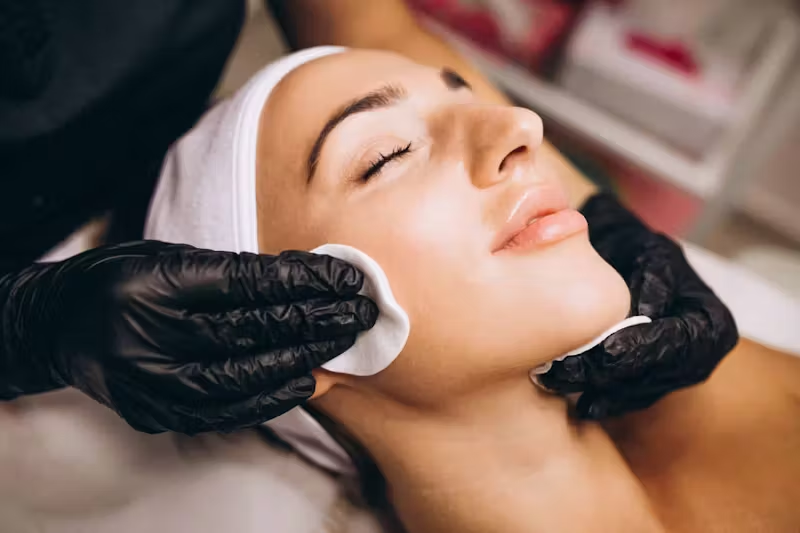
Almost every client who walks into our Orange, CA studio has heard of both a HydroFacial and a chemical peel. Both are marketed hard, both promise clearer and brighter skin, and both are booked in millions of appointments a year. But when a client asks me "which one should I get?" — the honest answer is: it depends entirely on what your skin actually needs.
This guide is the version I wish more clients had read before booking. I'll break down what each treatment physically does to your skin, which one works for which problem, and when it's smart to combine them.
The short answer, up top
Book a HydroFacial if you want deep pore cleansing, hydration, and immediate glow with zero downtime. Book a chemical peel if you want to fade pigmentation, resurface texture, or stimulate collagen — and you can handle a few days of visible peeling. Most of my clients end up doing both, just for different reasons.
What a HydroFacial actually does
A HydroFacial uses a handheld wand with vortex suction and infused serums to cleanse, exfoliate, extract, and hydrate your skin — all in one 45-minute session. Think of it as a machine-driven version of a traditional facial, but more thorough and more consistent.
The wand glides across your face, gently lifting dead skin cells and pore debris while simultaneously pushing hydrating serums into the freshly cleaned pore. It works on the surface layer of your skin — the epidermis — and it works with your skin, not against it.
Because the treatment is machine-driven, results are predictable visit-to-visit. There's no manual pinching, no aggressive scrubbing, and no visible redness after. You can go straight back to work or an event.
For a deeper look at how it works, our HydroFacial guide walks through every step.
What a chemical peel actually does
A chemical peel is a resurfacing treatment. We apply a controlled acid solution — usually glycolic, salicylic, lactic, or TCA — that dissolves the outermost layers of dead skin. Over the following 3–7 days, that treated layer flakes off, revealing fresher, more even skin underneath.
Peels are stronger than a HydroFacial. Where a HydroFacial cleans the surface, a peel actively remodels it. That's why peels are the go-to for:
- Hyperpigmentation (sun spots, melasma, post-acne dark marks)
- Fine lines and early signs of aging
- Stubborn texture issues that HydroFacials alone can't fix
- Deep-set acne scarring (with a proper series)
The trade-off is downtime. Depending on the peel strength, you may look pink or flaky for anywhere from 1 to 7 days. Our full breakdown of chemical peel strength levels covers what to expect at each depth.
Head-to-head comparison
Here's how they stack up on the metrics clients actually care about:
| Factor | HydroFacial | Chemical Peel |
|---|---|---|
| Downtime | Zero — go straight back to work | 1–7 days depending on depth |
| Best for | Cleansing, hydration, immediate glow | Pigmentation, aging, texture, collagen |
| Frequency | Every 4 weeks | Series of 4–6, then every 3–6 months |
| Feels like | Cool wand gliding across skin | Tingling, mild burning for a few minutes |
| Sensitive skin? | Yes, with adjusted protocol | Only mild peels — case by case |
| Results visible | Immediately | 3–14 days as peeling completes |
| Compounding effect | Monthly maintenance | Series-based transformation |
Which one for which skin goal
Here's how I think about it when a client tells me their concern:
Goal: brighter, cleaner-looking skin fast
Winner: HydroFacial. The immediate glow is real — you'll notice it walking out the door. Perfect for pre-event or pre-photo prep. Book 5–7 days before if you want peak glow to hit on the day.
Goal: fade dark spots, sun damage, or melasma
Winner: Chemical peel series. A HydroFacial can help maintain the results, but the actual pigment fading happens with peels. Expect 4–6 sessions spaced 4 weeks apart for meaningful results.
Goal: clear congestion, blackheads, and oily skin
Winner: HydroFacial. The vortex suction reaches into pores that manual extractions can't. If you've never had one and you have clogged pores, this is the treatment that will genuinely surprise you.
Goal: fade post-acne marks and scarring
Winner: Chemical peel (or BioRePeel). Our acne treatment protocol often combines HydroFacial for pore clearing with a peel series for scar remodeling. Both play a role.
Goal: anti-aging and firmness
Winner: Chemical peel series for the collagen stimulation, with HydroFacial as maintenance layer between peel rounds. Add red LED light therapy after either treatment for extra collagen support.
Goal: sensitive or reactive skin
Winner: HydroFacial with a gentle protocol. Peels are possible but require the mildest formulation — always tell your esthetician about reactivity before booking.
Not sure which one is right for you?
Every appointment at MASHMEOVER starts with a real skin consultation — no scripted upsells. We'll tell you honestly which treatment fits your skin.
Book a ConsultationCan you do both? Yes, here's how
Most of my long-term clients do both — just not in the same appointment. The rhythm that works best:
- Monthly HydroFacial for pore maintenance, hydration, and consistent glow.
- Quarterly peel series (or as-needed) for pigmentation, texture, and anti-aging goals.
- Space peels and HydroFacials at least 2 weeks apart so your skin barrier has time to recover between active treatments.
Some HydroFacial protocols include a light glycolic peel boost as part of the exfoliation step — a nice entry point if you want to test how your skin responds to acids before committing to a full peel series.
The third option most people don't know about
Worth mentioning: there's a third player in the resurfacing conversation that's changed the game for busy clients in Orange County. BioRePeel is a next-generation TCA peel that delivers real chemical peel resurfacing without the downtime. No visible flaking, no pink face for a week — just the exfoliation and collagen stimulation of a peel with the "back to work Monday" convenience of a HydroFacial.
For a lot of clients — especially professionals who can't afford visible peeling — BioRePeel has become the "if I could only pick one" answer. It's not always the right call (deeper skin concerns still need a traditional peel series), but it's the treatment I recommend most for the client who wants meaningful results and zero social downtime.
My honest recommendation
If you're brand new to professional skincare and just want to see what a great treatment looks and feels like — start with a HydroFacial. The visible glow, the zero downtime, and the low commitment make it the smartest first booking.
If you have a specific goal — fading pigmentation, resurfacing texture, treating scarring — a chemical peel or BioRePeel is what will actually move the needle. HydroFacial alone won't get you there.
If you can commit to monthly care, do both. Rotate a monthly HydroFacial or facial with a quarterly peel series. Add membership pricing and you get the best value in the studio.
Either way — don't guess. Come in, sit down, let me look at your skin, and I'll tell you honestly what will work.